August 26, 2026
What Features Should You Look for in a Non-Repainting Fibonacci Scanner?
1.3k
A
Non-repainting Fibonacci scanner can help traders identify Fibonacci-based setups without constantly changing past signals. When a scanner repaints, it may modify or remove earlier signals after new price data appears. This can make historical results look better than they were in real-time trading. A non-repainting system aims to keep confirmed signals stable once the required market conditions have been met.
When choosing a scanner, look for clear signal rules, stable calculations, and transparent confirmation methods. These features can help you understand why the scanner identifies a setup and whether it fits your trading strategy.
How Does Accurate Fibonacci Detection Improve Trading Analysis?
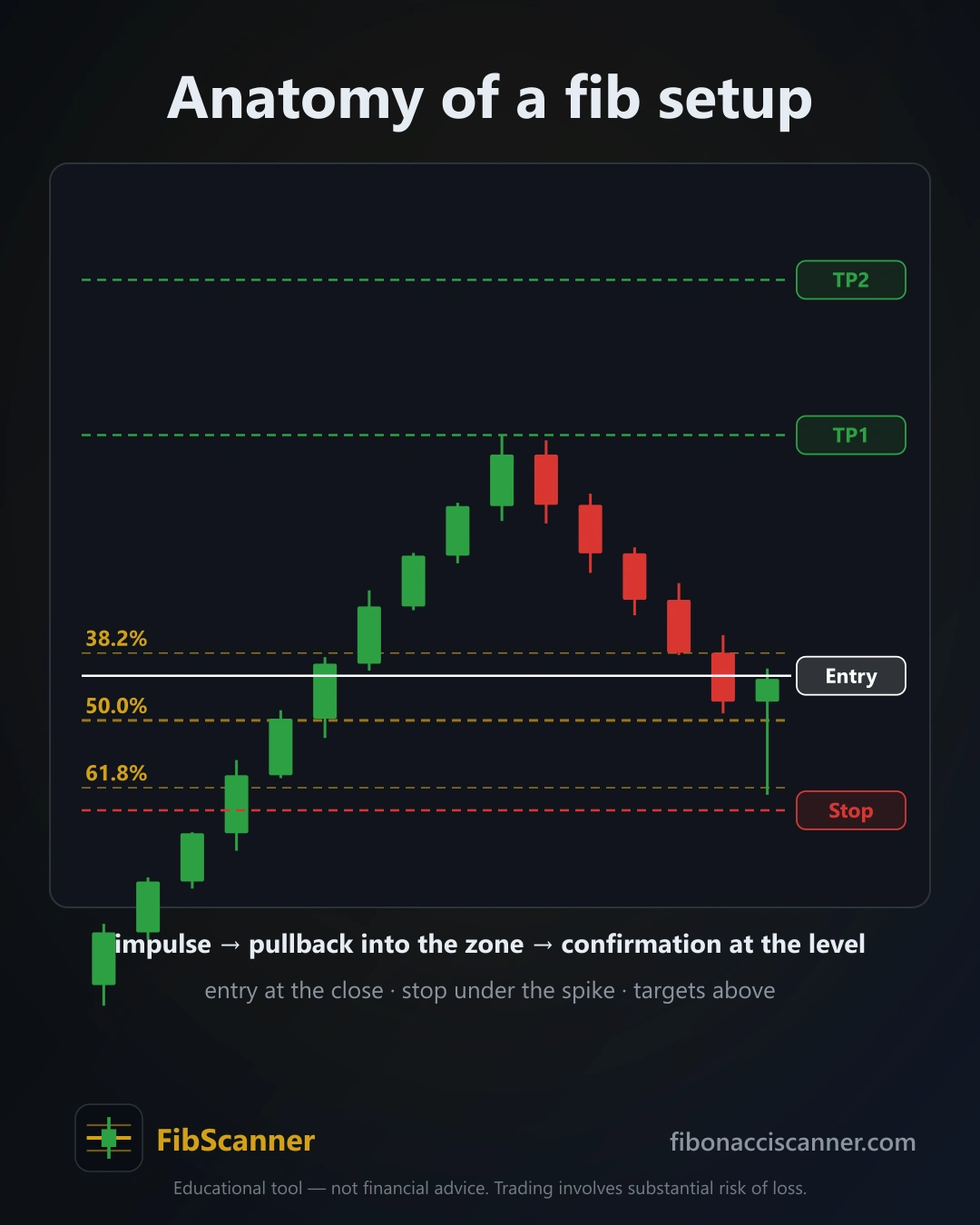
Fibonacci tools help traders study potential retracement and extension levels. However, manually checking charts across several assets can take considerable time. A reliable scanner can automate much of this process and highlight markets where a potential Fibonacci setup is developing.
Accuracy should remain a priority. Look for a scanner that identifies meaningful swing highs and swing lows using clearly defined rules. It should also avoid changing confirmed levels simply because the market produces new candles.
A quality scanner should make its calculations easy to understand. This transparency allows you to compare its signals with your own chart analysis rather than treating every alert as an automatic trading decision.
Why Is Multi-Market Scanning an Important Feature?
Modern traders often monitor several markets at the same time. Checking every stock, currency pair, cryptocurrency, index, or commodity manually can become inefficient. This is where a Chart scanner for multiple markets can provide significant value.
A multi-market scanner allows you to monitor a wider selection of instruments from one interface. Instead of switching between dozens of charts, you can review potential setups in a centralized dashboard.
Look for support for the markets you actually trade. A useful scanner should provide flexible symbol selection and allow you to create watchlists. The ability to scan different timeframes can also make the tool more practical for both short-term and longer-term strategies.
What Role Does Real-Time Scanning Play?
Market conditions change quickly, so timely information matters. A scanner should process new market data efficiently and update its results without unnecessary delays.
Real-time scanning can help you discover developing Fibonacci setups as they appear. However, speed should not come at the expense of accuracy. The scanner should clearly distinguish between developing and confirmed signals.
Ideally, the interface should show when a signal formed, what timeframe produced it, and whether the setup remains valid. These details make it easier to decide whether further analysis is worthwhile.
Which Fibonacci Levels Should the Scanner Support?
A strong Fibonacci scanner should recognize commonly used retracement and extension levels. Popular retracement levels include 23.6%, 38.2%, 50%, 61.8%, and 78.6%. Extension levels can also help traders study possible continuation targets.
The exact levels you need depend on your strategy. Therefore, customization is valuable. A good scanner should allow you to select or adjust the Fibonacci levels used during analysis.
You should also check whether the tool supports both bullish and bearish market structures. Flexible configuration makes the scanner more useful across different trading approaches.
How Important Are Alerts and Notifications?
A scanner becomes more useful when it can notify you about relevant setups. Instead of continuously watching the dashboard, you can receive alerts when predefined conditions occur.
Look for customizable alerts through the available platform. Depending on the tool, these may include on-screen notifications, sound alerts, email notifications, or other supported methods.
The best approach lets you control which events trigger an alert. Too many notifications can create noise, while overly restrictive settings may cause you to miss useful opportunities.
Why Should You Look for Clear Market and Timeframe Filters?
Filters help traders focus on the setups that match their strategy. A
Chart scanner for multiple markets should ideally provide filters for symbols, timeframes, trend direction, Fibonacci levels, and other relevant conditions.
For example, a trader may want to scan only higher-timeframe bullish setups or focus on specific currency pairs. Custom filters can reduce irrelevant results and make the scanning process more efficient.
A clean filtering system also improves readability. You should be able to identify the strongest candidates without sorting through an overwhelming number of signals.
How Can Backtesting Support Better Evaluation?
Backtesting can help you understand how a scanner's rules performed against historical data. However, historical performance does not guarantee future results.
When evaluating a Non-repainting Fibonacci scanner, pay attention to whether its historical signals accurately represent what would have been visible at the time. This distinction matters because repainting can create misleading backtest results.
Look for transparent testing options and clearly defined entry and exit conditions. If possible, compare historical signals with archived chart data to see whether the scanner maintains its original signals.
What Interface Features Make a Scanner Easier to Use?
A powerful scanner should also be easy to navigate. Complicated dashboards can slow down analysis and increase the chance of overlooking important information.
Look for a clean layout that displays the symbol, timeframe, Fibonacci setup, trend direction, signal status, and alert information in an understandable format.
Sorting and watchlist functions can further improve efficiency. When you can quickly organize results by timeframe, market, or setup type, you can spend more time analyzing opportunities instead of managing the scanner.
Should You Choose a Customizable Fibonacci Scanner?
Customization can make a major difference because every trader uses different rules. Some traders focus on specific Fibonacci levels, while others combine Fibonacci analysis with trend indicators, volume, price action, or moving averages.
A flexible Non-repainting Fibonacci scanner should let you adjust relevant settings without making the system unnecessarily complicated. Customization should support your existing strategy rather than force you to change it.
Before choosing a tool, identify the conditions you normally use and check whether the scanner can reproduce them.
How Can Fibonacci Scanner Improve Your Market Workflow?
A scanner should support your analysis rather than replace it. Fibonacci Scanner can be useful as part of a broader workflow when you need to monitor multiple instruments and identify potential Fibonacci setups efficiently.
Start by defining your trading rules, then configure the scanner around those rules. Review its signals manually, check the underlying chart structure, and consider broader market conditions before making decisions.
Fibonacci Scanner can become more valuable when it combines stable signals, multi-market scanning, useful filters, customizable alerts, and a straightforward interface.
Ultimately, the best scanner is not necessarily the one with the most features. Choose one that provides reliable calculations, avoids repainting confirmed signals, supports the markets and timeframes you follow, and helps you analyze opportunities with greater efficiency.